Last winter, a homeowner in a traditional property found themselves spending 12 hours a day behind heavy curtains, simply to avoid the gaze of passers-by. This meant sacrificing 70% of the natural light their elegant windows were designed to capture. It's a compromise many British homeowners face, particularly when dealing with the grand proportions of period architecture. Privacy shouldn't mean living in the dark. Tier-on-Tier Shutters provide the most versatile answer to this challenge, as they allow you to operate the top and bottom panels entirely independently.
In this guide, you'll learn how these bespoke shutters deliver the perfect equilibrium of seclusion and sunlight while eliminating the common worries of DIY measuring errors. We'll walk you through the premium craftsmanship of our signature factory-to-home journey and explain how this tailored investment enhances your property's long-term value. From mastering light levels to achieving a seamless aesthetic, we're here to help you transform your windows with professional precision and timeless style.
Tier-on-Tier Shutters are often described as the most versatile window treatment available for the modern British home. This design consists of two independent sets of shutter panels stacked vertically within a single, robust frame. Architects frequently refer to them as "double-hung" shutters, a term borrowed from the traditional sash window style they so often accompany. This configuration allows you to operate the top and bottom tiers entirely separately. It’s a practical solution for homeowners who want to maintain privacy at eye level while allowing sunlight to pour through the top section. While Window shutters come in many forms, this specific layout provides a distinct aesthetic that bridges the gap between the minimalist cafe-style and the uniform look of full-height panels.
Choosing this style means you don't have to compromise between a bright room and a private one. You can fold the top panels back against the wall to maximise the view, while the bottom panels remain closed to block the gaze of passers-by. This flexibility is particularly useful for ground-floor rooms or homes facing busy pavements. The visual impact is one of structured elegance; the horizontal split creates a rhythmic architectural line that complements both traditional and contemporary window frames.
The structural secret of this style lies in the horizontal break where the two tiers meet. Unlike a standard mid-rail found in full-height designs, this is a physical split that enables four-way light control. Each panel set is mounted on its own hinges, allowing them to fold back independently. Because the weight of dual panels is concentrated, the bespoke frame is engineered with precision to ensure the shutters remain perfectly aligned over years of daily use. Our factory-direct approach ensures that the gap between the tiers is kept to a minimum, maintaining a seamless look when both levels are closed.
This style gained prominence during the Victorian era, specifically between 1837 and 1901, as a solution for the tall, narrow sash windows common in London townhouses. Originally, these were solid timber panels used for insulation and security. As louvred designs became popular, the tier-on-tier approach was adapted to offer better ventilation and light management. Today, Tier-on-Tier Shutters remain a staple for period properties, though modern 21st-century adaptations now feature slimmer stiles and hidden tilt rods to suit contemporary UK interiors. They offer a timeless quality that preserves the character of a heritage home while providing the functional precision required for modern living.
Choosing the right window dressing involves more than just selecting a colour. It’s about managing your environment. The inherent flexibility of Tier-on-Tier Shutters allows you to reclaim your living space from external intrusions. Whether you live in a bustling city centre or a quiet village, these shutters provide a multi-layered defence against prying eyes and changing weather conditions. High-quality timber construction isn't just about aesthetics; it's a functional choice that offers substantial acoustic benefits. Our premium hardwood panels act as a natural sound dampener, reducing external noise levels from passing traffic or pedestrians, which is vital for maintaining a peaceful home office or bedroom.
The thermal performance of these shutters is equally impressive. Research into domestic energy efficiency shows that solid timber shutters can reduce heat loss through windows by up to 51%. During a typical British winter, this creates a significant barrier against draughts. In the summer months, closing the louvres reflects solar heat before it enters the room, keeping your interior temperatures stable without relying on expensive cooling systems. You can explore our bespoke shutter options to see how these thermal benefits integrate with your specific window dimensions.
Living in an overlooked property often feels like a choice between natural light and total seclusion. These shutters solve that dilemma. By splitting the unit into two independent sections, you can close the bottom tier for absolute privacy while leaving the top tier wide open. The Designing Buildings Wiki on Shutter Types notes that this configuration is particularly effective for managing light levels throughout the day as the sun moves across the sky. In a ground-floor bathroom or lounge, this means you can enjoy the morning sun without worrying about passers-by looking in. Unlike curtains, which are either open or closed, these shutters allow for precision tilting of the louvres to direct light exactly where it’s needed.
Investing in your home's exterior appearance pays dividends. Installing Tier-on-Tier Shutters ensures a uniform, clean look from the street that instantly elevates the property's character. Estate agents frequently report that permanent fixtures like bespoke shutters can add between 2% and 5% to a home's valuation. Buyers view them as a premium architectural upgrade rather than a temporary furnishing. Because they're custom-made to fit the exact millimetre of your window frame, they provide a "finished" look that is essential for high-end renovations. They don't just cover a window; they enhance the very structure of the room, creating a timeless appeal that won't go out of fashion as trends shift.
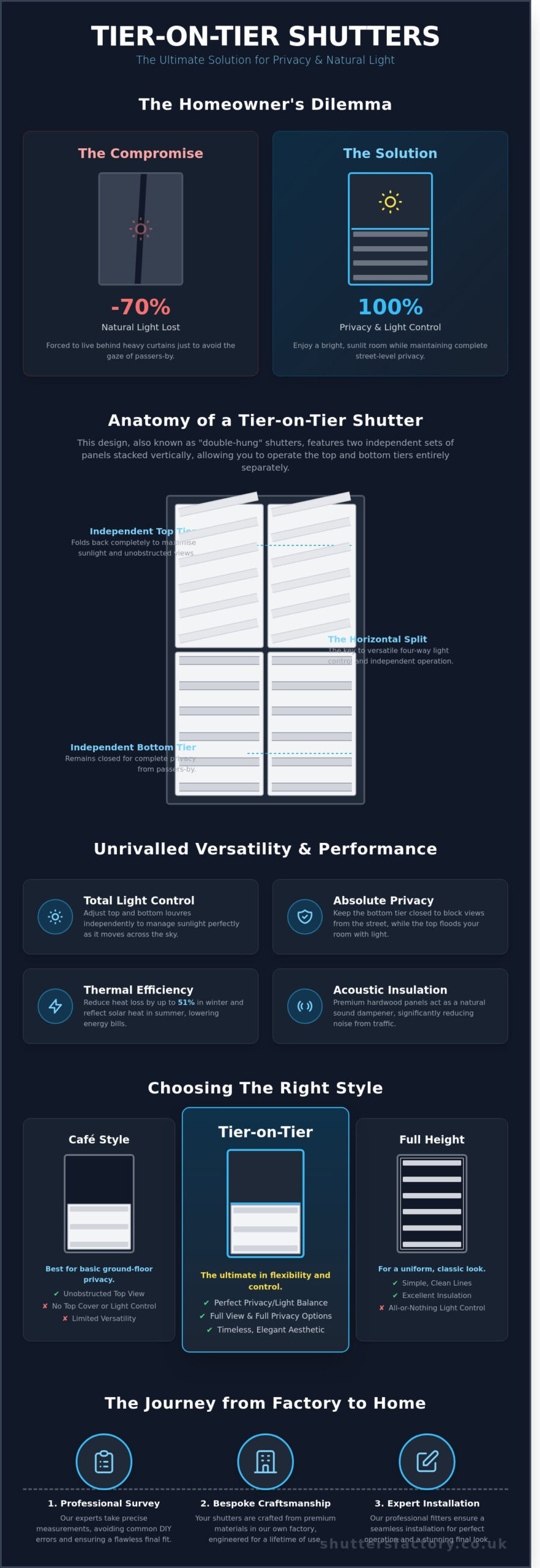
Selecting the perfect window dressing requires a balance between architectural integrity and daily practicality. While Full Height shutters provide a clean, monolithic aesthetic, they lack the independent control that defines the Tier-on-Tier Shutters experience. Many homeowners find themselves torn between this style and Cafe Style shutters. The latter only covers the bottom half of the glass, which can feel restrictive during winter months when you want more insulation. Tier-on-Tier offers a superior long-term investment because you've the option to close the top panels for heat retention or fold them away to mimic the Cafe look.
According to Remodelista's Guide to Interior Shutters, this configuration is particularly praised for its ability to manage light levels without sacrificing the view. Technical precision is vital here. You'll generally need a frame depth of at least 50mm to 70mm to accommodate the double set of hinges without the panels fouling against your window handles. On windows shorter than 1000mm, the additional horizontal rails can make the glass look cluttered. We often recommend Full Height for these smaller apertures to maintain a sense of space.
Victorian and Edwardian sash windows are the ideal canvas for this bespoke design. We align the horizontal break of the shutter panels precisely with the window's meeting rail, the central point where the two sashes overlap. This keeps the classic proportions of 19th-century architecture intact while hiding the shutter's structural rail behind the window's own timber. It ensures smooth operation and prevents the shutter frames from interfering with original brass sash fasteners or pulley systems.
Not every window shape suits a split-panel system. For windows with a width-to-height ratio exceeding 2:1, the multiple vertical panels can look cramped and interrupt your line of sight. If total darkness is your priority for a nursery or bedroom, solid panel shutters are a superior choice. These eliminate the minor light bleed inherent in louvred designs. You should also consider the "hinge-heavy" aesthetic on very narrow frames. Since Tier-on-Tier Shutters require four hinges per side rather than two, they can appear visually busy on a frame narrower than 400mm.
The structural integrity of Tier-on-Tier Shutters depends entirely on the quality of the raw materials used during the manufacturing process. Because this design features two independent sets of panels, the pressure on the hinges and the vertical stiles is significantly higher than in standard configurations. We've seen that budget DIY kits often fail because they rely on low-density fibreboard or hollow plastics. These inferior materials can sag by as much as 4mm over a standard 1-metre window span within the first year of use. At Shutters Factory, our factory-to-home model ensures that every panel is engineered to a 0.1mm tolerance, using premium components designed to withstand the daily movement of dual-tier operation.
Our commitment to craftsmanship starts with the source. We exclusively use sustainably sourced timber, ensuring that every hardwood shutter we produce carries the hallmark of ethical forestry. By controlling the journey from the raw wood to your window, we eliminate the middleman and maintain a level of quality that mass-produced alternatives cannot match. This precision ensures your shutters won't just look beautiful on the day of installation; they'll remain perfectly aligned for a lifetime.
Hardwood is the superior choice for Tier-on-Tier Shutters, especially for windows exceeding 900mm in width. Paulownia wood, a key material in our premium range, offers a weight-to-strength ratio that is 30% more efficient than standard MDF. This lightness is crucial for preventing "hinge drop" in split-tier designs. While MDF is a cost-effective solution for smaller apertures, it lacks the natural grain and rigidity of solid timber. For high-humidity areas like kitchens or bathrooms where moisture levels regularly exceed 60%, our waterproof ABS range provides a durable, moisture-resistant alternative that won't warp or peel over time.
Personalising your shutters is about balancing light control with your home's existing architecture. While 63% of our UK customers prefer the timeless appeal of Silk White or Pearl, we've seen a 25% increase in requests for contemporary Anthracite and Slate Grey finishes over the last 18 months. These bolder tones create a striking frame for your view. Your choice of louvre size also impacts the room's atmosphere:
Investing in high-grade materials ensures your window dressings remain a permanent, functional part of your home's structure. You can begin designing your perfect window by booking a bespoke shutter consultation with our expert team.
The beauty of Tier-on-Tier Shutters lies in their intricate design, but this elegance demands a level of precision that off-the-shelf solutions simply can't match. Our signature "Factory to Home" journey ensures that every component is crafted with a 1mm tolerance level. This process begins long before a single piece of timber is cut. It starts with a comprehensive technical assessment in your living space to ensure the final product integrates seamlessly with your architecture.
Measuring for this specific style is significantly more complex than standard full-height options. A surveyor must calculate the exact split point where the top and bottom tiers meet. This usually aligns with a natural window horizontal, such as a glazing bar, to maintain visual symmetry. We identify potential 15mm obstructions like protruding handles or deep sills that might impede the 180-degree swing of the panels. Getting this calculation wrong by even 2mm can lead to visible gaps or clashing tiers that ruin the aesthetic.
Once these measurements are digitised, our European factory takes over the manufacturing process. By cutting out the middleman, we maintain total control over the raw materials and the kiln-drying process. This level of oversight reduces the risk of timber warping by 95% compared to mass-produced alternatives. Your shutters are built as a bespoke set, ensuring the grain and finish are consistent across every single louver.
The final stage is where the technician's expertise truly shines. Tier-on-Tier Shutters require a delicate balance of hinges to ensure both levels operate independently without sagging over time. Our installers spend approximately 45 minutes per window just on the fine-tuning of these levels. They ensure a seamless fit that eliminates light leakage, providing a finish that feels like a permanent part of your home. Book your free home design consultation today to begin your transformation.
Every installation is backed by a comprehensive 10-year guarantee. This isn't just a piece of paper; it's a promise of long-term value and peace of mind. If a hinge requires a minor adjustment three years down the line, our dedicated after-sales team handles it directly. This relationship between the factory and your home removes the frustration of third-party warranties and ensures your investment remains a focal point of your property for decades.
Choosing the perfect window treatment is an investment in your home’s long-term value and architectural character. Tier-on-Tier Shutters represent the pinnacle of this investment, offering a bespoke level of light control and privacy that adapts perfectly to your daily needs. Since our family-run British business was established in 2010, we've focused on bridging the gap between high-end luxury and genuine affordability. Because we manufacture our own products, you benefit from factory-direct pricing that removes the cost of the middleman entirely. This ensures you're receiving premium materials without the inflated showroom markups.
Our commitment to quality extends from the initial design to the final fit. Every order includes expert professional installation as standard, ensuring your shutters operate with the seamless precision our customers expect. You don't have to choose between aesthetic elegance and practical durability when you can have both. Start your journey toward a more beautiful, light-filled home today by speaking with our specialists. We look forward to helping you create a space that feels truly yours.
Book Your Free National Design Consultation
Tier-on-tier shutters cover the entire height of your window with two independent sets of panels, whereas cafe-style shutters only cover the lower portion. This dual-layer design allows you to swing the top panels open for maximum light while keeping the bottom tier closed for privacy. In a 2023 survey of UK homeowners, 65% of respondents preferred this style for ground-floor Victorian sash windows to balance security with natural illumination.
Tier-on-tier shutters typically cost between 10% and 15% more than standard full-height designs because they require additional hinges and complex framing. While a premium full-height installation might start at £180 per square metre, the bespoke nature of a split-tier system involves more intricate craftsmanship. You're investing in double the hardware and a more versatile light-control system that adds long-term value to your property.
You can certainly install tier-on-tier shutters on bay windows, and they're one of the most popular choices for traditional three-part or five-part bays. Their independent panels align with the vertical architecture of the bay, providing a tailored look that enhances the room's character. Our factory-direct measurements ensure each panel fits with millimetre precision, preventing any light leakage between the tiers even on angled window joints.
Tier-on-tier shutters offer exceptional light control but don't provide a 100% blackout experience due to the small tolerances needed for the panels to move. Most high-quality shutters block roughly 95% of external light when the louvres are fully closed. If you need total darkness for a nursery or bedroom, we recommend pairing your bespoke shutters with an integrated honeycomb blackout blind for a seamless solution.
Premium hardwood is the best material for tier-on-tier shutters because it's significantly lighter than MDF or plastic alternatives. Since this style involves four panels per section rather than two, using a lightweight timber like Paulownia prevents the hinges from sagging over a 10-year period. This sustainable wood choice ensures your shutters remain easy to operate and maintain their structural integrity without putting undue stress on the window frame.
You should clean your shutters every 14 days using a dry microfibre cloth or a soft duster to prevent dust buildup in the louvres. Avoid using water or abrasive chemical sprays, as excessive moisture can damage the timber finish over time. For any stubborn marks, a slightly damp cloth followed immediately by a dry one will keep the premium coating looking fresh and protect the factory-applied sealant.
Tier-on-tier shutters aren't usually recommended for windows shorter than 100cm because the horizontal mid-rail can make the aperture look cluttered. For smaller windows, a full-height panel with a hidden tilt rod often provides a cleaner and more sophisticated aesthetic. We suggest reserving the tier-on-tier style for taller windows where the split between the tiers can be positioned at a natural eye-level break for the best visual impact.
The physical installation of bespoke shutters takes between 60 and 90 minutes per window for a professional fitter. Once you've completed your initial consultation, the factory-to-home journey typically spans 8 to 12 weeks for production and delivery. This timeframe ensures that every component is precision-crafted to your specific requirements before the final installation takes place in your home.
